
TDEE calculator with macro breakdown
Results stay hidden until you calculate. Estimates are informational and adult BMR formulas may be less suitable for people under 18 or special medical circumstances.
Enter your details and press Calculate TDEE to view BMR, TDEE, calorie goals, macros, water, and meal split.
Calculate to see your maintenance estimate.
Calculate to see an energy-balance pace estimate.
Calculate to see a lean-gain pace estimate.
Calculate to see the custom goal pace.
Calculate Your TDEE and Daily Macros in Seconds
This TDEE calculator, with a macro breakdown, will help you estimate how many calories your body burns in a day and how to split those calories between protein, carbohydrates, and fat. The tool is the right starting point for you to lose weight, gain muscle, recompose your body, or simply maintain.
This is a better starting point than making a guess.
Many people will start a diet by copying a random meal plan or cutting calories too hard. That can lead to low energy, cravings, ineffective workouts, and burnout pretty quickly. A plan based on your TDEE (Total Daily Energy Expenditure) starts with you, your activity level, and your goal so you can make smarter nutrition choices from day one.
What You Can Calculate Here
It calculates your BMR, TDEE, BMI, goal calories, and daily macro targets. It also allows you to compare your calorie targets for fat loss, maintenance, and muscle gain without doing the math yourself.
What Is TDEE?
Total Daily Energy Expenditure (TDEE) It means the amount of calories your body burns each day from typical activity, exercise, digestion, basic bodily functions, and even a full day of physical activity.
TDEE: Why it matters
Your TDEE is basically the number of calories you eat each day. If you eat about that much food on a regular basis, your weight will usually stay the same. If you consume fewer calories than that, you’re in a calorie deficit. Eating more than this amount means you are in a calorie surplus.
How Your TDEE Changes Over Time
TDEE isn’t forever. Your weight, your exercise level, your employment, your sleep, your stress, and your routine. All of these things can impact how many calories you burn in a day. “This is why it is most beneficial to start with the calculator result and then look at the actual progress data.
TDEE vs BMR: What Is the Difference?
BMR = Basal Metabolic Rate This computation is an estimate of the number of calories your body burns while at rest to keep you alive, breathe, circulate blood, control your temperature, and support key organs.
BMR Is Just One Piece of the Daily Burn
The sum of BMR and activity is known as TDEE. TDEE is a better indicator of your actual day than just your resting needs; thus, it’s smarter to organize your food intake around TDEE.
A Simple Mnemonic
The resting metabolic rate (BMR) is the number of calories the body burns. TDEE (Total Daily Energy Expenditure) is the amount of calories you consume in a day. Then use TDEE as the main parameter when you set a calorie objective.
How to Choose the Right Activity Level
Activity level is a major determinant of the difference in TDEE readings among people with similar body measurements. Choose the level that reflects your regular routine, not the one for your best week.
Inactive
Pick “sedentary” if you spend most of your day sitting, do little structured exercise, and take few steps. It’s excellent for a range of desk-based activities with minimal daily mobility.
Light Active
Lightly active – If you do mild exercise, spend a lot of time wandering about, or move around a lot during the day. This level is often ideal for people who are not very physically active but who still spend an excessive amount of time seated.
Moderate activity
If you keep a reasonable step count and exercise regularly, opt for moderately active. This level will be appropriate for many people who are active and doing structured activities.
Highly active
* Select “very active” if you exercise hard, play sports often, work out hard or spend many hours on your feet each day. Only select this level if your week is predominantly filled with high levels of activity.
Active or athlete
Those who are very active throughout the day and train regularly should reserve the highest degree of activity. This group is suitable for competitive athletes, endurance training, and people with physically demanding jobs.
How the Calculator Estimates Your Results
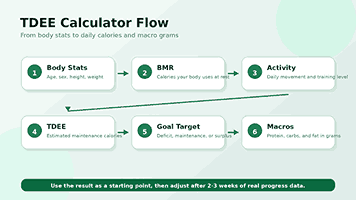
The calculator takes your personal info and calculates your basal energy expenditure. It then multiplies that by an activity factor and converts it to your calorie and macro objectives. The order is simple and straightforward to understand.
Step 1: Input your body measurements
Type in your sex, age, weight, and height. These inputs are used to calculate your basal energy requirement. The average US home price is $417,700, according to Redfin.
Step 2: Determine Your Activity Level
Please choose the activity level that most resembles your typical week. Don’t jump to a higher level after just one or two intense workouts. TDEE, or Total Daily Energy Expenditure, looks at the full week: your job, your steps, your workouts, and your rest days.
Step 3: Set your goal
Choose if you want to lose fat, maintain weight, gain muscle, or manually adjust calories. The calculator then provides you a goal to shoot for, not just a maintenance number.
Step 4: Assess your macro ratio
See the calorie goal and also check the protein, carb, and fat grams. These numbers help give you a sense of how your calorie goal can translate to meals throughout the day.
Why Choose Kulator’s TDEE Calculator?
The Kulator TDEE calculator is simple, straightforward and accurate. The TDEE calculator with macro breakdown uses the latest metabolism research to give results based on your body profile. It’s free and fast, and it works exceptionally well on mobile, so you can check your TDEE whenever you want.
Macro Breakdown Explained
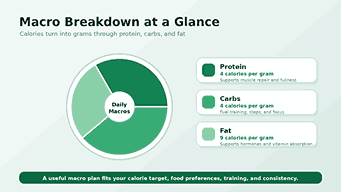
A macro breakdown will tell you exactly how your daily calories are broken down into protein, carbs, and fats. This is important because macronutrients influence satiety, performance, recovery, and diet flexibility, whereas calories control energy balance.
Protein
Protein is important for the repair and growth of bodily tissue. It can also help maintain a calorie deficit by increasing satiety. Physically active individuals often enjoy benefits from a higher protein diet than inactive individuals during resistance training or fat loss.
Carbohydrate
Carbohydrates are a quick and convenient fuel for mental function, sports, walking, and training. Don’t be afraid of carbs, just make sure they fit your calorie needs and come mainly from nutrient-dense foods.
Fat
Dietary fat is also a beneficial source of fat-soluble vitamins, hormones, and cell health. Fats have more calories per gram than protein or carbs, so even little quantities can add up calories quickly.
Calories / Gram
The calorie content of protein and carbohydrates is approximately four per gram. Approximately 9 calories are provided by one gram of fat. This conversion allows the calculator to translate your calorie objective to macrograms.
Best Macro Splits for Different Goals
There is no one perfect macro split for anybody. Your calorie target, workout style, food preferences, appetite, and health requirements should decide the correct division.
Weight Loss Macros
To get fat loss, you want to prioritize enough protein and a reasonable calorie deficit. Even with a small amount of calories, protein helps maintain lean mass and make you feel full, he says. You can change the carbohydrates and lipids to your liking, provided the total amount of calories is the same.
Macros for Muscle Building
To build muscle, you need sufficient protein and a managed calorie surplus to recuperate from workouts. Ensure carbohydrate consumption is sufficient for the demands of high-intensity workouts and integrate lipids to increase the overall quality of the diet.
Maintenance macros
To maintain a sustainable macro split, ensure that your calorie intake aligns with your Total Daily Energy Expenditure (TDEE). Maintenance is best when meals are not restricted and provide energy, training, digestion, and social connections.
Body composition macros
Recomposition is aimed for a slight excess, maintenance, or a modest deficiency depending on where you are beginning from. Keep your protein intake high. Train with incremental resistance. Track your strength, waist measurements, and pictures, not just your weight.
Turn TDEE Into a Goal Target
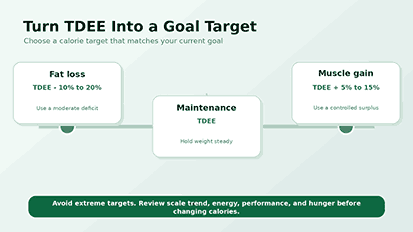
When you turn your TDEE estimate into a simple target, that’s when it becomes useful. For most people, a mild adjustment is needed, not an excessive one. As a rule, minor changes are easier to stick with and are more consistent over time, which is crucial for achieving sustainable fat loss goals.
For Fat Loss
A usual fat loss goal is about 10% to 20% below TDEE. This range can help make progress possible without forcing most people to do aggressive restriction. If you are hungry, tired, or have bad workouts, reduce the deficit.
For Maintenance
Maintenance is the act of eating food that is near to your total daily energy expenditure (TDEE). This objective is perfect when you want a steady body weight, better performance, a break from dieting, or a clear benchmark before you change calories again.
to gain muscle.
For Muscle Gain
Generally a regulated surplus is better than a large surplus. Most people will begin with a 5-15% increase in energy expenditure (TDEE) and then adjust their program based on speed of weight gain, recuperation, and strength.
Example TDEE and Macro Breakdown
Example Item | Value |
Goal | Fat loss |
Estimated TDEE | 2,400 calories/day |
Target deficit | 15% below TDEE |
Daily calorie target | 2,040 calories/day |
Protein | 160 g/day |
Fat | 68 g/day |
Carbohydrates | 197 g/day |
How to Read the Example
The rest of the calories come from carbs. The example keeps protein high and fat reasonable. That gives you a well-rounded plan that can support exercise while still being below maintenance calories.
How Accurate Is a TDEE Calculator?
Importantly, a TDEE calculator is an estimation, not a lab measurement. It can get you close enough to get started, but you can only maintain what your body, your movement, and your consistency allow, which means that individual variations in metabolism and lifestyle factors can significantly affect your actual energy needs.
Use Progress Data to Improve Accuracy
For 2 to 3 weeks, record your average body weight, food intake, gym performance, vigor, and hunger. If your weight doesn’t change in the way you expect, tweak the calories slightly rather than starting over.
Do not suddenly change calorie consumption
Daily weight fluctuations can be attributed to water, sodium, carbohydrates, digestion, changes in the menstrual cycle, soreness, and tension. Look at the weekly averages before making a decision.
Food Quality Still Matters
Calories and macros are crucial, but quality food still matters for health, digestion, energy, and long-term consistency. Focus your meals mostly on lean protein, high-fiber carbs, fruits, vegetables, healthy fats, and the correct amount of water.
Easier to understand the plan
Decide which meals you like and can eat over and over again. A plan that appears good on paper but feels uncomfortable in practice will not last. Flexible structures tend to perform better than rigid structures.
Use macros as goals, not as a jail
Try to hit your macro goals as closely as possible, but don’t stress out about little variances. It’s more important to be consistent each week than to be flawless with every single gram.
Common TDEE Mistakes to Avoid
The TDEE calculator with macro breakdown is most effective if the inputs are honest and if you make modifications with patience. Here are some mistakes to avoid if you want to make your idea viable.
This figure is an overestimation of activity
Most people select an activity level that corresponds to their most active day, not their average week. Such behaviour can result in setting the calorie goal too high, which may slow down the rate of fat loss.
Overestimating the Consumption of Food
Small expenses can pile up quickly. Weekend dinners and calories from cooking oils, sauces, snacks, and beverages can add up, even if weekday meals seem to be under control.
Cutting Calories to an Insufficient
Aggressive dieting can result in quick weight loss in the short term but can also harm vitality, training performance, mood, and consistency. Having a minor calorie deficit is often recommended, as it can be maintained over a long period of time.
Ignoring Protein
Getting enough protein can slow fat loss and may reduce your ability to hold on to muscle in a deficit. If your goal is to improve your body composition, include a source of protein in most of your meals.
Treating one outcome as definitive
As you gain or lose weight, or become more or less active, your TDEE will change. If you change your weight significantly or your daily steps for more than a few weeks, you need to reassess your training regimen.
How to Adjust Your Calories After Two Weeks
It is recommended that you use the results from your calculator for at least two consecutive weeks before making any changes. This allows your body’s trends to establish a positive pattern over an extended period.
If fat loss is too slow
The tracking accuracy and weekend intake are to be checked first. If your trend is barely moving and your tracking looks consistent, then either cut your calories by 100–200 per day or add a substantial amount of physical exercise.
If the fat loss rate is too fast
The calorie intake may need to be slightly increased if you are losing weight rapidly and your energy levels are low. Losing weight quickly might be exciting, but it can interfere with exercise and increase the risk of rebound eating, which can ultimately make long-term weight management and fitness goals more difficult to achieve.
If your muscular growth is too slow to achieve your goals
In the absence of any changes in body weight or strength after many weeks of constant use, add 100 to 200 calories to your daily diet. Keep the excess in check so you don’t add fat and build muscle mass.
If Weight Is at Maintenance
Remember, the odds are you will weigh about the same. You can keep your calorie intake the same, improve the quality of your meals, or move into a goal phase with a small deficit or surplus.
How to Build Meals Around Your Macro Targets
Translating grams into simple meals makes it easier to set a macro goal. No complicated formulas are necessary. Four anchors of repeatable meals that promote the intake of protein, carbs, fats, and fiber are important.
Begin every meal with protein
Sources of protein require the most prep. Lean meat, eggs, fish, Greek yogurt, cottage cheese, tofu, tempeh, lentils, beans, and protein powder are protein sources that can help you reach the objective. Don’t hold your protein for one meal; spread it out throughout the day.
Include carbs according to your energy and training
Eat more carbohydrates around your workouts to improve your performance. Rice, potatoes, oats, pasta, fruit, whole-grain bread, and legumes can help with recuperation and the intensity of your training. On rest days, you can still have carbs if they help your appetite, but you don’t have to remove them completely.
Add fat to make meals more enjoyable
Add lipids to your diet selectively because they are heavy in calories. You can also add olive oil, avocado, almonds, seeds, eggs, and fatty salmon for more taste and delight. If you find it difficult to control your calorie consumption, watch high-fat foods for a couple of weeks.
Please remember the fibers and micronutrients
Macro plans that incorporate high fiber foods are more satisfying. Help with satiety and digestion are vegetables, fruit, legumes, cereals, potatoes and whole grains. You may still think that a diet focusing on macros and skipping fruits and vegetables is incomplete.
Should You Use the Same Calories Every Day?
Some people find it easier to keep the same calorie goal each day as a way of tracking their success. Some people like to eat a little more on training days and a little less on rest days. Either way, you may get the weekly average.
The Daily Consistency Method
If you like a simple routine, you should eat the same amount of calories every day. This method is particularly beneficial for beginners, busy people, and those who feel stressed by changing numbers.
Training Day method
Increase the quantity of calories consumed on training days if your workouts are more pleasant due to an increase in energy and carbohydrates. Keep your weekly average down so that a big workout day doesn’t blow your fat loss deficit or push your weight up too much.
Weekly Average Matters Most
The weekly average is the key. Your body responds to continuous patterns. One beautiful Monday can’t make up for a high-calorie weekend, and one mediocre meal can’t destroy a positive week. Evaluate the plan after assessing the weekly average.
Who Should Use a TDEE Calculator with Macro Breakdown?
This calculator is excellent for people new to nutrition, gym members, athletes, busy professionals, and just about anyone who wants a different starting point. It works particularly well when you need both macros and calories all in one spot.
Newcomers
Novices can use the calculator to understand maintenance calories and avoid arbitrary dieting. The macro breakdown also removes some of the guesswork from meal prepping, allowing novices to create balanced meals that align with their calorie and protein goals.
People’s Fat Loss
Fat loss is more successful when you are conscious of your calorie intake and have a sufficient protein intake. The TDEE calculator with macro breakdown gives you a simple first goal, rather than requiring you to make an educated approximation.
Those that build muscle
Then you need training, rest, protein, and enough calories to build muscle. The TDEE calculator with macro breakdown is used to prevent too much swelling and too little food.
People Who Maintain Their Weight
Retention is not failure. It may help with long-term weight control, lifestyle balance, and performance. Use the TDEE result to optimise meal or training content and maintain consistency.
When to Get Professional Advice
Medical or personalized nutrition care cannot be replaced by a calculator. Consult a trained health expert if you are pregnant, nursing, under 18, diabetic, have kidney disease, have a history of eating disorders, or have other medical conditions that affect your diet.
Use the tool with care
Treat the numbers as a tool for teaching and planning. The important things are your health history, your symptoms, your lab findings, and your body composition, not any one estimate.
Why Calculate Your TDEE?
Knowing your TDEE (Total Daily Energy Expenditure) is vital when you are deciding on your food and exercise regiment. If you’re not aware of these numbers, you could be eating too much or too little, which could hinder your growth. So if you want to lose weight, maintain a healthy weight, or gain muscle, your TDEE is a wonderful place to start.
Conclusion
The TDEE calculator with macro breakdown is more than just numbers… It provides a personalised diet plan tailored to your needs. With a reliable and proven formula for calculating your total daily energy expenditure, you can know exactly how many calories your body burns each day. Furthermore, a breakdown of carbohydrates, protein, and fats will be provided.
This way you may make meal plans according to your goals, whether you want to lose weight, maintain your current physique, or add muscle. A TDEE (Total Daily Energy Expenditure) and macros (macronutrients) calculator will help you make smarter food decisions instead of guessing or just counting calories.
Use these facts as ballpark estimates to get your quest started. Track your progress. Make adjustments, observe changes, and adjust your calories. Adjust your statistics if your activity level changes. That way you will get the finest outcomes over time.”
Helpful Tools for Better Planning
Want to stay organized while working towards your health goals? NexezTool has more helpful tools. These apps will help you budget, plan, and track your daily life so you can make smarter decisions outside your food and fitness routine.
Zakat Calculator Pakistan – Calculate your Zakat with confidence and accuracy to take control of your financial obligations.
Inflation Calculator: Know the inflation and your budget. Get a sense for how food or nutrition prices could move over time.
CGPA Calculator: Assists students in monitoring their academic performance and in setting their academic, health, and lifestyle goals.
Frequently Asked Questions
What’s the best TDEE calculator that gives you a macro breakdown?
The best TDEE calculator with a macro breakdown should estimate maintenance calories, display BMR, apply the activity level, and convert calories into protein, carbs, and fat. It should also allow you to choose a target such as muscle building, maintenance, or fat loss.
How can I calculate my TDEE?
The estimation of BMR and the subsequent multiplication by an activity factor are the methods by which TDEE is determined. Enter your age, sex, height, weight, and activity level, and a calculator will do the calculations for you instantly.
Is TDEE the same as maintenance calories
The TDEE is often used to estimate the number of calories necessary for maintenance. If you constantly eat food that is roughly equal to your TDEE, then your weight will generally remain rather stable.
How many calories should I eat to lose weight?
The popular starting point for many individuals is a calorie target that is about 10% to 20% below TDEE. The best deficit depends on your health, hunger, consistency, exercise level, and body size.
How many calories do I need to eat to gain muscle?
Several find that a managed excess of about 5-15% above their TDEE is a good starting point. You want a smaller surplus to help you train and recuperate but also to minimize fat growth that you don’t want.
What macronutrient split should I go for for fat loss?
The optimal macro split for fat reduction emphasizes protein, provides enough fat, and uses carbs for energy and training, while remaining in a calorie deficit. The precise distribution can differ depending on individual tastes.
Do you need to eat the calories you’ve burned off during exercise?
Just because a tracker says you burned 500 calories doesn’t mean you should eat an extra 500 calories. Trackers can overestimate calories burned. Instead, use your trend weekly and alter your aim incrementally.
How often should I recalculate my TDEE (Total Daily Energy Expenditure)?
Recalculation of TDEE is necessary in the event of a substantial change in weight, a substantial change in training, or a substantial shift in daily steps or job activity. Many people are comfortable with a check-in every 4 to 8 weeks.
Why am I not losing weight on a deficit?
Water weight can mask short-term fat loss. You may not be in a constant deficit. Before you even consider messing with calories, look at your tracking accuracy, weekend intake, sodium, sleep, tension, and weekly weight averages.
Is this calculator a substitute for a dietitian?
No. There are good estimates, but for specific medical needs, eating disorder history, pregnancy, sports performance, or complex goals, a registered dietitian or competent health care specialist can give you personalized advice.