Scam Checker for Suspicious Websites, Emails, Texts, and Online Offers

Scam screening assistant
Check suspicious websites, emails, numbers, and messages in one place. No data is stored on the server.
Good for phishing pages, fake stores, login portals, and giveaway links.
Useful for impersonation, disposable addresses, and suspicious sender patterns.
Pattern checks only. This tool does not verify ownership.
Channel context improves behaviour analysis and recommendations.
Optional, but helps with targeted risk checks.
Urgency, secrecy, payment pressure, and credential requests are strong indicators. 0 chars
What did they ask for?
Select every request that applies. These are among the strongest scam indicators.

Check for scams on websites, emails, messages, and online deals

Scams on the internet are now more polished, convincing, and aggressive than ever. People don’t just get spam with bad grammar and design anymore. Today, scammers make fake websites, emails that look real, urgent text messages, and very convincing social media offers that seem real at first. That’s why it’s important to have a smart scam checker.
 
A good scam checker warns people to be careful before they click links, respond to emails, pay for things, or share personal information. They don’t have to guess; they can use a tool that shows them how to put pressure on people, warning signs, and strange requests. This makes the internet safer for anyone who needs protection quickly and easily.

Why a Scam Checker Matters in Everyday Online Life

Every day, people face digital risks, even when they are doing everyday things. A simple shopping trip, a delivery update, a banking alert, or a job application can quickly turn into a scam. A lot of people don’t need a long lesson on cybersecurity. They need a scam checker they can trust to help them determine whether something is safe.
 
That’s when a good scam checker comes in handy. It helps real people in real life. It helps them figure out if something is suspicious before a small mistake costs them money, steals their identity, or causes long-term stress. The goal is not to scare people. The goal is to give them more confidence so they can make better choices.

A good scam checker should be simple to use

Many security tools don’t work because they use hard-to-understand language. When someone is already confused or worried, they don’t want to have to figure out technical reports. They want a clear explanation, a clear risk result, and useful advice that they can use right away. A good scam checker should be easy to use from the start.
 
A better scam checker should tell people what to do clearly. It should say what is wrong, why it matters, and what to do next. People shouldn’t have to guess. It should be less confusing if it replaces confusing warning signs with clear, understandable advice.

A Scam Checker Helps People Slow Down Before Acting

People who act too quickly give scammers what they want. They use fear, excitement, and fake authority to make people not think clearly. An email that isn’t real says your account will be closed. A fake text says that your package can’t be delivered. A fake recruiter tells you that if you wait, you won’t get the job offer. In every case, pressure is what makes the scam work.
 
A good scam checker lets you think about your answer before you send it. That break is very important. It gives users a chance to review the content again, reflect on the request, and spot patterns they might have missed before. That one pause can often save you a lot of money.

Scam Finder for Websites You Can't Trust
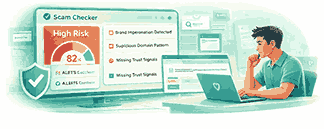
Fake websites remain among the most dangerous things on the internet. A fake website can look like a real business by copying its layout, using similar branding, and showing a checkout or login page that looks safe. A lot of people don’t see a fake domain, a strange URL structure, or missing trust signals until it’s too late. People can look at websites before they trust them with a good scam checker.
 
The risks of a website from a practical point of view. It should help people spot fake domain names, false claims, suspicious payment pressure, and attempts to impersonate brands. Users can significantly reduce the risk of fraud by checking a website before they buy, log in, or share personal information.
scam checker analyzing a suspicious website for fraud risk

Scam Checker for Emails That Look Legitimate

Fraudulent emails are much better now. A lot of people now copy professional layouts, try to look like well-known brands, and use language that sounds polished enough to fool careful people. They might ask you to confirm your payment, verify your account, reset your password, or do an urgent identity check. People can use a good scam checker to look over these emails before they respond.
 
The scam checker should look for requests that seem strange. It should also watch for urgent threats and language that does not fit the brand. Unusual behavior from the sender and links that ask users to do unsafe things are warning signs. This type of email review is important. Phishing attacks often succeed, not because of poor design, but because they use emotional pressure and believable imitation.
 
If you see suspicious words, use our Digital Text Analyzer. Look more closely at strange language, repeated pressure phrases, and message structure. Do this before replying to an email or DM that seems fishy.

Text Message and Mobile Alert Scam Checker

One of the fastest-growing types of online fraud is text-message-based scams. Every day, people get fake texts about deliveries, fake alerts about their bank accounts, fake verification notices, and fake warnings about their accounts. These messages are often short, urgent, and focused on getting things done, which makes them even more dangerous when you read them on your phone. A good scam checker should help people quickly figure out what these messages mean.
 
An exemplary scam checker should look at both the message and the reason behind it. Does the message prompt the user to click quickly, confirm their identity, send a code, or open a suspicious-looking link? Text analysis is useful at that point. The user doesn’t have to guess; they have a better idea of the risk level.

Social Media DM Scam Detection

Scammers now reach out to people through Messenger, Facebook, Instagram, WhatsApp, and Telegram. They might reply with fake support answers, pretend to be someone you trust, promote fake giveaways, or start emotional chats that lead to requests for money. Today’s scam checkers need to do more than just review websites and emails.
 
A full scam checker should help people determine whether direct messages, copied scripts, strange requests, and manipulative social behavior are real. This is important because online fraud now works on all platforms. A scam might start on social media, move to a private chat, and end on a fake payment page. The tool needs to show that reality.

Fake Payment Request Scam Detector

A payment request is one of the clearest signs of fraud. Scammers often ask for gift cards, cryptocurrency, wire transfers, or other methods of payment that are hard to undo. The request itself often shows the real danger, even when the message sounds polite or professional. A smart scam checker should be able to find this right away.
 
Users should be able to understand why some payment methods are risky with a better scam checker. It should show that the words on the screen aren’t the only thing that is dangerous. It also comes from what the sender wants the user to do. People are much harder to control when they can see these patterns clearly.

Scam Detection for OTP, Password, and Account Access

Multiple frauds aim to gain access to accounts. A message could ask for a password, a one-time code, permission to log in, remote screen control, or confirmation of security. People often hide these requests as support steps, banking checks, or actions to recover their accounts. A good scam checker should see these requests as very bad signs.
 
A reputable scam detector should tell you that businesses don’t usually ask people for passwords or one-time passcodes in casual messages. The risk level increases significantly as soon as a sender requests account information or direct access. People are more likely to stay calm and do things safely when they know what’s going on.

Job Offer and Recruitment Fraud Monitor

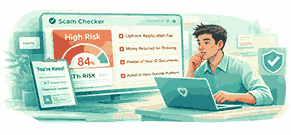
Job scams target people who need money, want flexibility, and want to find a job quickly. Scammers say that you can get approved quickly, work from home, start working right away, make a lot of money, and do simple tasks. After that, they talk about buying fake equipment, paying for training, getting identity documents, or payroll information. A good scam checker should help job seekers see these offers more clearly.
 
Professional scam checkers should point out promises that aren’t possible, hiring steps that are too quick, communication that isn’t on the platform, and requests for payment that aren’t part of a real hiring process. This is important because job scams often exploit people’s hopes and fears. Users need a tool that keeps them safe without being harsh or judgmental.
 
Got a bogus job offer? Send a formal complaint, follow-up, or verification note fast with our Free Application & Letter Generator. It helps you write a clear response in no time.

Online Shopping Scam Checker

Fake online stores keep tricking shoppers by copying product pages, offering fake deals, creating a sense of urgency, and creating unclear checkout flows. A scam site might look clean and modern, but it was made just to steal your money or credit card information. A reliable scam checker can help people think twice before they buy something.
 
More effective scam detectors should look at trust gaps in online shopping content. It should help people spot discount claims that seem too good to be true, signs that the store isn’t trustworthy, payment pressure that’s too risky, and signs that the store might disappear after the purchase. This is especially helpful during sales, when people are in a hurry, and scammers know demand is high.
scam checker reviewing a suspicious job offer for scam signals

Marketplace Fraud Detection Tool

Peer-to-peer marketplaces are great for finding things, but they also make it easy for people to trick you. A fake buyer might send a screenshot of a non-existent payment. A fake seller might try to get the deal off the site. Before someone picks up a collection, they might ask for a verification code or send a link to a suspicious collection. People feel better about these kinds of things when they use a smart scam checker.
 
A sophisticated scam checker should be able to find strange behavior in messages between buyers and sellers. It should warn you about fake urgency, off-platform pressure, payment confusion, and strange verification requests. That means the tool is useful for both people who just want to browse the web and those doing business online.

Crypto and Investment Offer Fraud Detection

Deceptions promising quick, fun, and highly profitable investments are common. Fraudsters offer guaranteed returns, exclusive access, short-time-only deals, or information that only they know. They often use social proof, screenshots, and words that evoke emotion to get people to pay attention. A good scam checker should help people think about these deals logically instead of emotionally.
 
A competent scam detector should flag returns that are too high, decisions that are made too quickly, pressure to pay, secrecy, and language that tries to get people to ignore their better judgment. This is important because it’s hard or impossible to get your money back once it goes through certain channels. A clear analysis helps users keep their money safe before making a decision.

Scam Tracker for Romance and Emotional Manipulation Scams

Some of the worst scams don’t start with a clear risk. They start with trust, empathy, and a strong emotional bond. Romance scammers and social manipulators start by building a relationship and then add risk later. The talk may seem nice and personal for days or weeks before it turns to money, investments, travel problems, or emergencies. A smart scam checker can help people spot the pattern sooner.
 
A more human-centered scam checker should look for emotional pressure, keeping secrets, sudden financial need, and efforts to cut off the target from outside advice. This kind of help is important because victims are often slowly manipulated. When they start to think something is wrong, they need to be clear, not to blame.

Scam Detection for Older and Vulnerable People

Not everyone who uses the internet has the same amount of experience with it. Older adults, first-time digital users, and teenagers may be more likely to fall for pressure-based fraud when they receive messages or claims they don’t understand or that seem urgent. That’s why a good scam checker should be easy to find, read, and have a calm voice.
 
Everyone in the family should be able to understand how a good scam checker explains risk. It shouldn’t use too much technical language; instead, focus on real warning signs. When people are stressed, they are more likely to use content that makes them feel safe than content that scares them.

Freelancer and Small Business Scam Buster

Fraud isn’t just a problem for customers. Fake invoices, surprise payment requests, dishonest clients, and strange file requests are also problems for freelancers, agencies, remote workers, and small businesses. A reliable scam checker helps professionals look over messages and avoid costly mistakes.
 
The scam detection tool for businesses should help you identify signs of impersonation, pressure to pay an invoice, requests to change an account, and risks associated with attachments. This means that the tool can keep you and your business safe at the same time.

Scam Checker Should Explain Risk, Not Just Show a Score

Numerous tools make the same mistake. They show a risk score but don’t explain how they arrived at it. That makes things more confusing, not more trustworthy. A better scam checker should tell the user what caused the result and why it matters. This makes the analysis much more helpful.

A legitimate scam checker should link the score to real proof. It should address requests that seem suspicious, language intended to trick people, fake urgency, trust gaps, and actions that could be dangerous. People feel more sure about what to do next when they know why the result happened.

Scam detectors should spot manipulation tricks

Fraudsters rarely stick to one tactic. They play on emotions, pretend to be people you trust, create fake urgency, ask for secrecy, and use friendly language to manipulate. The best scam checkers call out these tricks clearly, helping keep people safe.
 
Smart scam checker flags messages that rush you, ask for secrecy, or tell you to ignore safety. These are big warning signs. The best tools also explain what’s suspicious, so you know when something feels wrong.
 

You can use our TextRefine tool to clean up copied scam text before you report it.
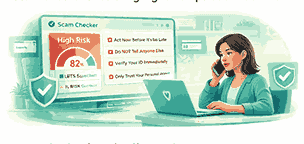
scam checker detecting manipulative language patterns in a suspicious message

The scam checker should show missing trust signals

Don’t just look for danger signs when doing a safety analysis. It should also think about what is missing. Does the message leave out facts that can be checked? Does the website not show normal signs of trust? Does the sender make strong claims but not give users anything they can safely check? A good scam checker should point out these holes.

A well-made scam checker helps people understand that fraud is often easy to spot when expected trust signals are missing. That could mean that the brand isn’t consistent, there isn’t a clear way to get help, the urgency is strange, or the payment method isn’t normal. Knowing what is missing is often just as important as knowing what is there.

A scam checker should guide you clearly

Individuals appreciate clear warnings. A reliable scam checker explains what is going on and shows you what steps to take. For example, you might end the chat, avoid clicking a link, call the real company, report the scam, or simply say no. Getting clear advice can make you feel less stressed.
 
A promising scam checker turns analysis into support for decision-making. It doesn’t tell the user what to do or give them a warning. It makes it easier to go from seeing something to doing something about it. That makes the tool more useful and more likely to regain trust.
Do you want to save scam evidence or pull files together for a report? PDF Suite All-In-One makes it easy to organize everything fast.

Before Clicks, Payments, and Responses, Use a Scam Checker

Timing is important for stopping fraud. People often need help right before they do something. A message comes. A web page opens. A buyer asks for something strange. A recruiter pushes for papers. That’s when a scam checker really comes in handy.
 
A useful scam checker helps people avoid getting hurt. It lets them look over the content before they click, send money, share data, or keep talking about something risky. It’s always better to stop something from happening than to fix it after it happens, especially with online scams that happen quickly.

Scam Checker Builds Better Digital Habits

A steadfast scam checker does more than just fix one problem right away. Over time, it helps users develop stronger instincts. The user learns from the result when the tool tells them why something looks suspicious. They will be able to spot pressure tactics, fake urgency, and risky requests more quickly in the future.
 
That learning effect is worth a lot in the long run. The tool is both a safety tool and a guide for how to act. This is one reason why a well-written scam-checker page can do better than competitor pages that rely solely on fear-based warnings.

Across platforms, scam checking encourages safer decisions

Online cons on the internet don’t stay in one place anymore. An email can start a scam, which can then move to a chat app, then to social media, and finally to a fake payment page. Users need a scam checker that can connect the warning signs across different formats and channels.
 
A more reasonable scam checker should be able to check websites, text messages, direct messages, job offers, shopping pages, and email content. That wider support makes the tool more useful in real life and for people today.

Scam Checker Helps Users Feel More Safe Online

Trust is important for digital safety. People shouldn’t feel like they can’t do anything when they get a strange email or see a suspicious website. A good scam checker can help you get rid of panic and give you structure. It helps people think more clearly, respond more clearly, and stay in charge.
 
The best things about a good tool are that it gives you confidence. It helps people go from confusion to action. They can make smart choices with a tool that clearly shows risk, rather than reacting emotionally.

Scam Detector Can Help You Avoid Losing Money

A lot of people who fall for scams don’t realize what happened until after they give out personal information, send money, or let someone else into their account. It can be hard, slow, and sometimes even impossible to get better. That’s why prevention is so important. A reliable scam checker helps people act sooner.
 
A pragmatic scam checker can help people avoid losing money by teaching them about risks before they make a mistake they can’t take back. This doesn’t mean the tool will definitely work. It means that the tool gives users a better chance of not getting caught in the first place.

Make scam checks a routine part of online safety

Most people are aware of digital risk, which is why they use antivirus software, spam filters, and password managers. Every day, a scam checker should be just as important for staying safe online. It makes people think about what they read, what they click, and what they’re being asked to do.

A modern scam checker works well with how most people use the internet. It comes in handy when you shop, hire someone, chat, bank, or browse the web. Because it fits in the real world, it’s a useful safety layer instead of a niche security feature.

How Does Scam Checker Work?

The tool looks at a website URL in different ways when you type it in:
  • Is HTTPS or another protocol used by the website?
  • Does the URL have an odd structure?
  • The domain name isn’t too hard to understand or misleading.
  • Are common scam keywords being used to target him?
  • There are many signs of trust.
The scale gives you a risk score that makes things clear when you add all of these things together.

General Online Safety

As a result, users should follow the advice of official cybersecurity authorities, such as the FIA Cyber Crime Wing, which provides reporting and awareness on online fraud and cybercrime in Pakistan, and the FTC, which informs consumers worldwide about online fraud. They send out warnings all the time.

Global Scam Trends & Major Frauds

Certain scams occur worldwide, not just in one place. When fraud occurs, it’s very important for people around the world to know about it. Interpol’s resources for raising awareness of cybercrime make it easy to identify where scammers are based and which types of online fraud are most common worldwide. Does this kind of information help people make better, more informed choices?

Pakistan Reporting Guidance

You can’t just ignore an online scam, a fake website, or a WhatsApp message that seems strange if you live in Pakistan. If you report these kinds of cases to the FIA Cyber Crime Wing, it will keep you and other users safe worldwide. When people report scams to the authorities, the authorities can investigate them and warn others who might be victims.

Scam Awareness & Prevention

Internet fraudsters often use psychological tricks, fake urgency, and big promises to get what they want. In these situations, it’s important not only to look at the results of a security tool but also to understand the government’s cybersecurity rules.
 
The CISA Cyber Security Best Practices guide shows people how to stay safe from fake offers, suspicious links, and misleading messages. Action Fraud UK, on the other hand, provides people with a lot of information on how to report online fraud and common patterns of it.

Frequently Asked Questions about Scam Checker

How does a scam checker work?

A fraud detector helps you look over emails, websites, text messages, offers, and online requests that seem suspicious. It highlights warning signs, risky words, and possible scams so you can make safer decisions.
 

Who should check for scams?

Malware detector can help anyone who uses the internet. It helps people who shop, work from home, look for jobs, have families, are older, are students, or run small businesses who want to lower the risk of online fraud.
 

Is it possible for a scam checker to find shady websites?

Sure, a good scam checker can help users determine whether a website is suspicious by identifying domains that look like others, fake urgency, trust gaps, claims that aren’t true, and requests for money or personal information that are dangerous.
 

Can a scam checker help with emails that are scams?

Of course, a good scam checker can help people spot scam emails by identifying phishing patterns, urgent threats, suspicious sender behavior, risky links, and requests for fake accounts.
 

Can a scam checker look at DMs and text messages?

True, a modern scam checker should help people review text messages, chat messages, and direct messages that appear suspicious across different platforms, since scams often move from one channel to another.
 

Does a scam checker make sure something is safe?

An honest scam checker shouldn’t promise 100% certainty. A strong tool helps users make better decisions by showing evidence, warning signs, and likely risk patterns, thereby reducing uncertainty.
 

Why do scammers use the word “urgent”?

Swindlers use urgency because people who are in a hurry are more likely to click, pay, or respond without checking the facts. A scam checker helps slow down that moment and make the pressure tactic clearer.
 

What should I do if a scam checker flags a high risk?

If a scam checker says there is a high risk, the best thing to do is usually not click, not respond, not send money, get in touch with the real company through official channels, and report the message if needed.
 

Scam Checker: Make Better, Safer Choices Online

The internet is fast, easy, and full of opportunities, but it also gives con artists new ways to trick people into trusting them. That’s why it’s so important to have a good scam checker these days. It lets users review content that seems suspicious before they take an action that’s hard to undo.
 
A qualified scam detector should do more than just warn. It should teach, guide, and keep safe. It should help people better understand risk, act more safely, and feel more at ease online. When a page has a lot of information on a topic and is easy to read, it is useful for both users and search engines.
Scroll to Top